An Old Woman of Bodh Gaya by Ryszard Wierzbicki
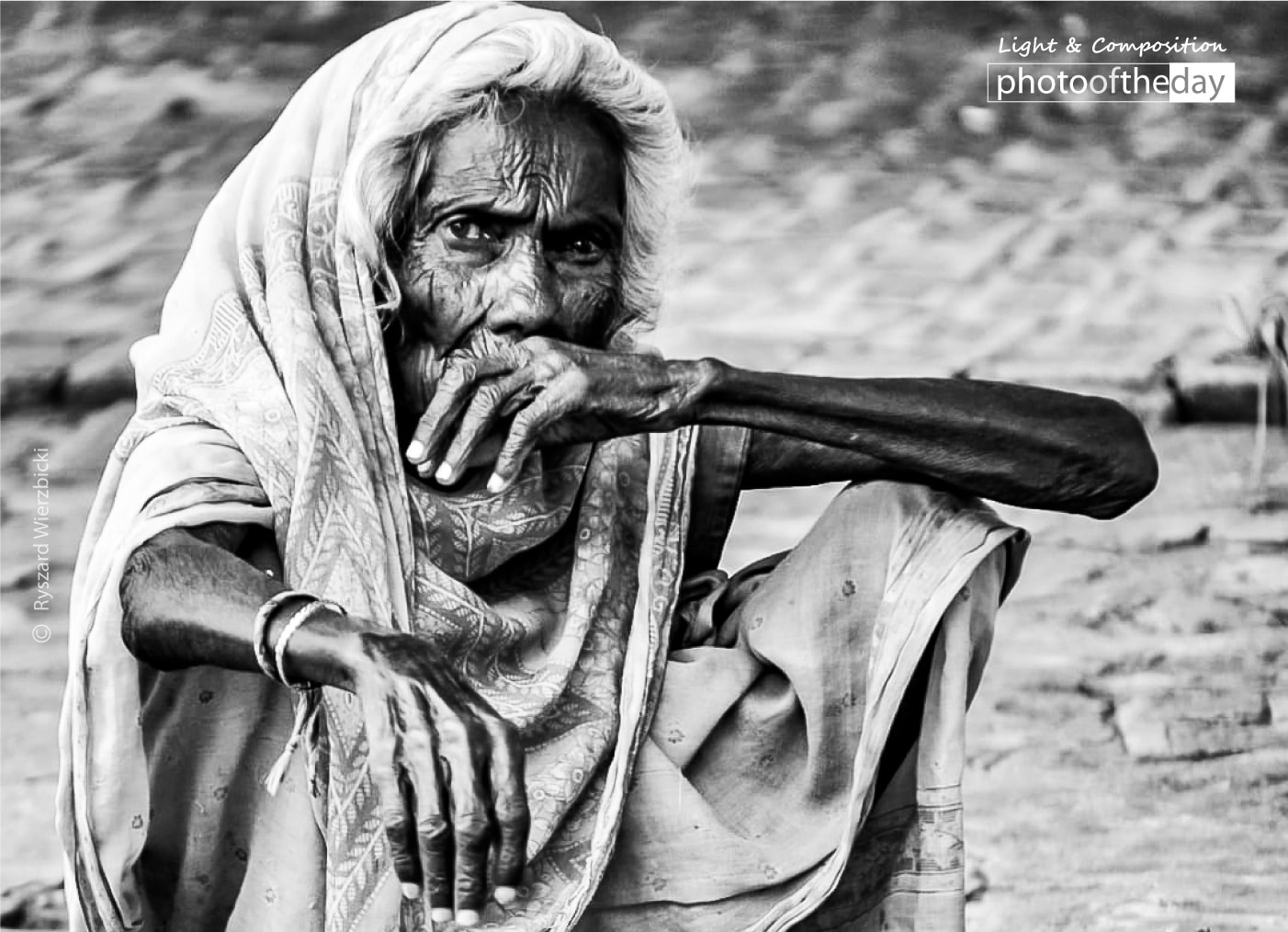
Captured in the spiritual heart of Bodh Gaya, this poignant portrait documents an elderly woman whose weathered features serve as a profound testament to the region's enduring history. The photographer utilized a 160mm focal length to isolate the subject, creating an intimate connection that highlights the dignity and life wisdom etched into her expression. By focusing on the intersection of Buddhist tradition and the local reality of poverty, the image transcends a simple portrait, offering a compassionate study of human resilience. Its technical precision and deep emotional resonance make it a compelling example of candid storytelling.
Ryszard Wierzbicki
Born in 1963, Ryszard Wierzbicki is a Polish-born photographer and educator currently based in Swindon, United Kingdom. After a diverse career spanning social sciences, child care, and corporate management, he transitioned to a life of global exploration, photography, and scuba diving instruction. His work is deeply influenced by his extensive travels through South-East Asia and his commitment to humanitarian causes, including volunteering for orphanages. Through his photography and travel forums, he shares a unique perspective on the world, defined by a transition from traditional professional life to a dedicated pursuit of visual storytelling.
Resonance Score Breakdown
Transparency Note: The resonance score (10.9/20) is calculated based on social engagement metrics collected before the award announcement.
Expert Photography Reviews · 4
The Map of Time
Seneca once remarked that life is long if you know how to use it, yet we often spend our days racing toward an end we cannot see, ignoring the history written upon our own skin.
Read the reflection →The Geography of Skin
There is a specific texture to time that gathers in the creases of the palms. It feels like dry parchment or the rough, sun-baked bark of an ancient banyan tree that has stood through a thousand monsoons.
Read the reflection →Reviews & Comments
Share your thoughts about this award-winning photograph. Your reviews contribute to the community engagement score.
The 160mm compression flattens the space, echoing the tight, psychological framing of August Sander’s portraits, yet it lacks his clinical detachment. Wierzbicki’s subject possesses a weary gravity that reminds me of Dorothea Lange’s Migrant Mother, though here the light lacks that sharp, Depression-era bite. I’m genuinely moved by the texture of her skin; it’s a cartography of survival. It’s a familiar trope, certainly, but the intimacy feels earned, pushing past the usual exoticism of the Indian street.
The 160mm compression flattens the picture plane, forcing the subject’s weathered topography into a rigid, singular mass. It’s a claustrophobic geometry. The frame doesn’t allow for escape; the heavy gaze anchors the composition’s fulcrum. While the background dissolves into soft, indistinct noise, the structural weight of the face remains absolute. I’ve rarely seen such brutal discipline in a candid portrait. It’s cold, it’s precise, and frankly, it’s the only way this frame holds together.
Most portraits of the elderly in India fall into the trap of aestheticizing poverty, but Wierzbicki avoids that cliché. By using a 160mm lens, he compresses the space, forcing us to confront the map of her skin without the distraction of a wider environment. It’s a brutal, honest proximity. I’ve seen thousands of these, yet her gaze actually made me look away for a second. That’s why it’ll still matter in thirty years. It’s unflinching.
At 160mm, the compression flattens the facial topography, forcing the lens to resolve the skin’s intricate micro-texture against a soft, creamy bokeh. It’s a masterclass in managing the focal plane; the diffraction limit hasn’t softened the deep creases around her eyes, which remain razor-sharp. I’m genuinely moved by how the light catches those weathered ridges. It’s rare to see such optical clarity render human resilience with this much scientific honesty. It’s simply breathtaking to behold.